Quick Answer Getting billed for a surgery or treatment you never received is alarming, but it doesn’t automatically mean someone stole your identity. More often than not, it’s a billing mix-up. Start by verifying the account through the provider’s official contact info, not the number in the text, and find out exactly why your name got attached before you do anything else.
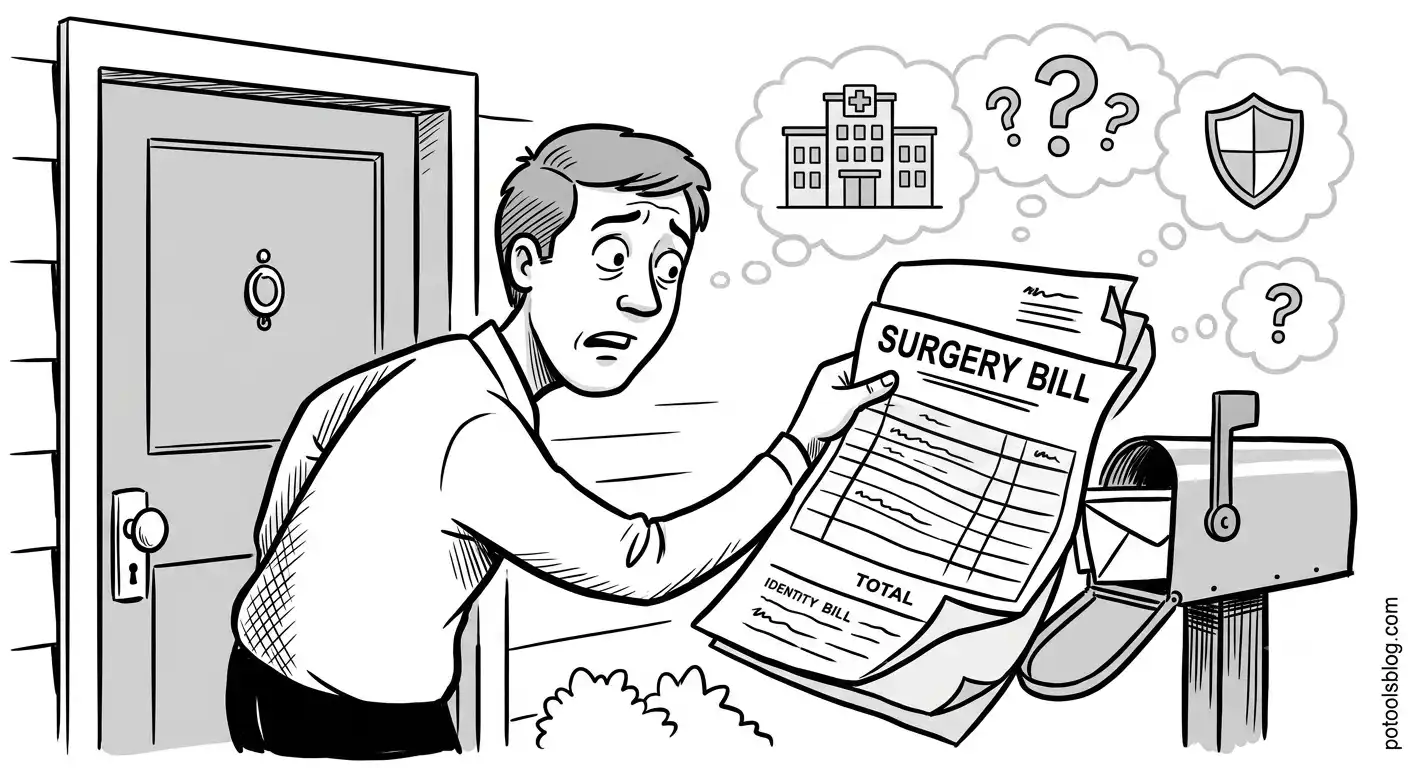
Imagine checking your phone before work and seeing a message that you owe hundreds, maybe thousands, of dollars for a surgery you know never happened.Your mind jumps to the worst possibilities almost immediately. Did someone steal your identity? Is this some kind of scam? And if you ignore it, could it eventually wreck your credit? That’s a completely normal reaction — a bill for something that never happened to you is pretty jarring.
Take a breath first. Medical identity theft does happen, but honestly, a huge share of these cases end up being something far less dramatic — a name mix-up, a mismatched birthdate, a records clerk who grabbed the wrong file. That doesn’t mean you should ignore the bill. It means you verify before you panic.This guide walks through the sequence that works: how to confirm what you’re dealing with, what to say when you call, and when — if ever — this becomes a police matter.
How Do You Know If a Medical Bill Sent To You By Mistake Is a Scam
Start here, because the wrong first move can cost you leverage later.
Skip the number in the text. Skip the payment link too. Look the facility up yourself — Google the name, find the real site, pull the billing line from there.
Once you’ve got someone on the phone, ask directly:
- Is there an account under my name and date of birth at all?
- What’s the exact procedure, date, and location on file?
- What information was used to open this in the first place?
If they come back and say yes, an account matching your legal name and DOB does exist, you’re not dealing with a random scam text anymore — you’re dealing with a real record that needs fixing. If they’ve got nothing under your name, you were probably just phished, and you can drop it there.
Is This Identity Theft or Just a Billing Error
Flip the assumption most people start with. It isn’t on you to prove you never had surgery. The burden runs the other way — the hospital has to show the charge belongs to you, not the reverse.It’s a good idea to keep that straight in your head, because most people get it backwards on instinct alone.In practice, billing offices run into one of a handful of situations, and identity theft is rarely the first one. Ask the staff to read back whatever they used to match the patient to you — name, date of birth, address, phone number, insurance details, anything tied to the file — and the answer will usually tell you which bucket you’re in.
Most common by a wide margin: a plain name mismatch, where someone else with a similar or identical first and last name had the procedure, and a clerk attached it to the wrong chart. Right behind that sits a data entry slip — a transposed digit in a birthdate or address that pulled two records close enough together for the system to merge them. Less frequent, but it happens: a shared health system, where a smaller practice feeding into a larger hospital network runs a loose intake search and cross-contaminates two files.Only after ruling those out does actual medical identity theft enter the conversation — someone using your name and enough of your details to get treated as you. It’s real. It’s just the least likely explanation, and it tends to travel with other red flags: an insurance claim you never filed, an address on the chart that isn’t yours, a physical description that plainly isn’t you either. A name-only match points toward clerical error. A full match across every field — name, birthdate, address, and phone all lining up — is the version that deserves more caution.
Should You Go To the Provider’s Office In Person
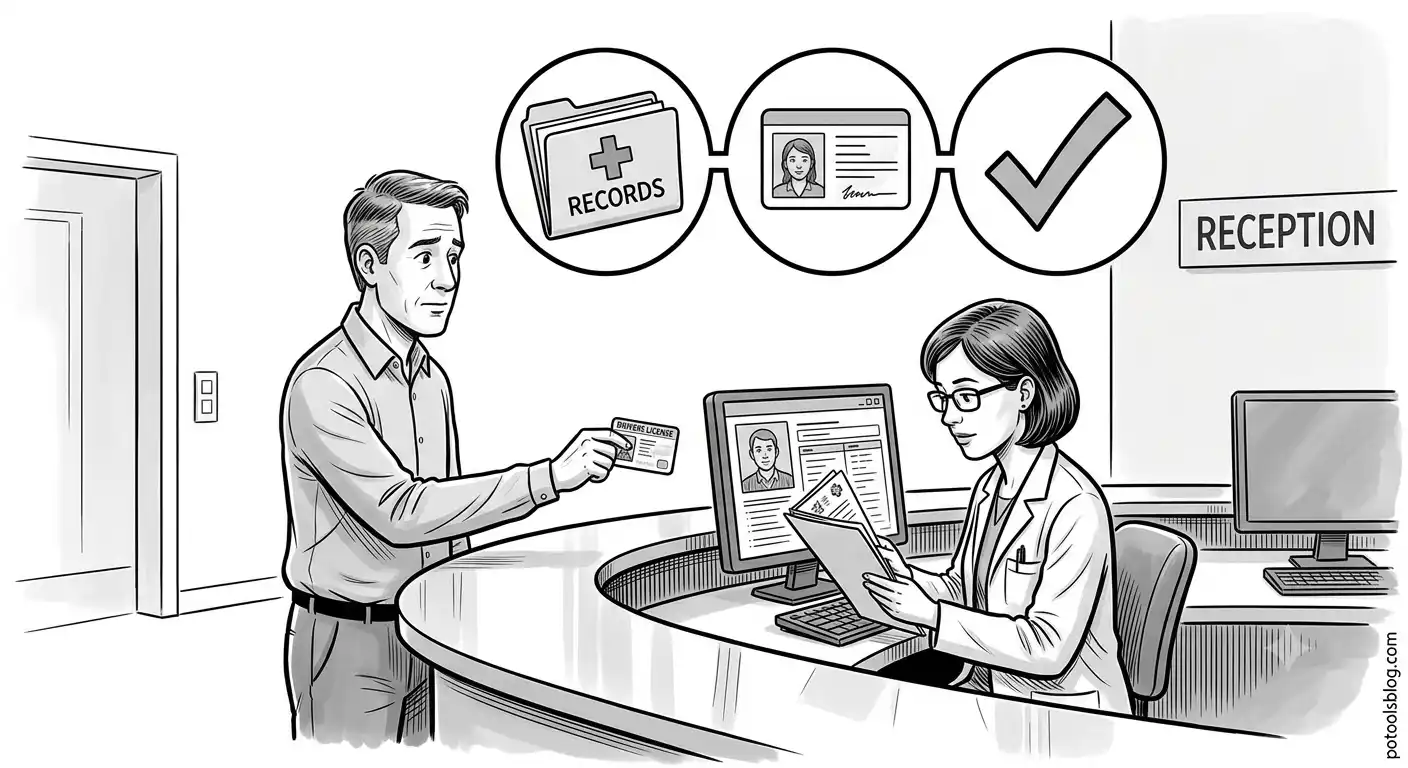
It isn’t always convenient, but if you can swing it, showing up in person is often what gets this sorted — sometimes the same day.
Phone calls get routed through scripts and hold queues. Staff at the front desk can pull the chart itself, hold it next to your driver’s license, and fix the file on the spot instead of promising a callback that may or may not happen.
Bring photo ID. Ask to see what’s attached to the record — visit notes, the physician’s name, the procedure code. If the chart describes someone who plainly isn’t you, that’s typically all the proof anyone needs.
One real-world example looked almost exactly like this. Two patients shared the same first and last name. The wrong chart got attached to the wrong billing file, and the person who received the bill had never set foot in the building. A quick trip to the front desk with a photo ID was enough — staff spotted the mismatch and cleared the account within minutes. No lawyer, no dispute letter. Just a five-minute conversation.
One mistake people make along the way: assuming no news means the issue got fixed. It doesn’t. If someone tells you a manager will call back in a few days, give it those few days — but if nobody calls, call them. Keep a note of who you spoke with and when, first and last name if you can get it. The goal isn’t just a verbal “we’ll take care of it.” It’s written confirmation that the account was corrected, ideally before the balance ever has a chance to age into collections.
Do You Need to File a Police Report Over an Incorrect Medical Bill
Not yet. Probably not at all, if this ends up being clerical.
A police report earns its place once there’s an actual confirmed case — someone impersonated you for treatment, an insurance claim went through in your name without your knowledge, or new accounts show up tied to your Social Security number. Filing early probably won’t help much, since at that point you still don’t know whether you’re dealing with fraud or just someone else’s chart attached to your name. If it does turn out to be fraud, IdentityTheft.gov — the FTC’s dedicated site — is often the better starting point anyway. It walks you through the process, generates an Identity Theft Report, and lays out what to do next. That report tends to carry more weight with credit bureaus and creditors than a generic police filing does.
For now, hold off. Wait until the office puts in writing what patient information got used.
Should You Freeze Your Credit Over a Medical Billing Mistake
Do it either way. It costs nothing, and there’s no real downside while a dispute is still open.
| Detail | Security Freeze | Fraud Alert |
|---|---|---|
| Cost | Free at all three bureaus | Free at all three bureaus |
| What it does | Blocks new creditors from pulling your report entirely | Requires creditors to verify your identity before extending credit |
| Duration | Until you lift it yourself | 1 year (standard) or 7 years (extended, requires an FTC identity theft report) |
| Best For | Anyone who suspects any exposure of their name, DOB, or SSN | A lighter-touch option if you still want lenders to see your file |
Check current freeze and alert steps directly at Experian, Equifax, and TransUnion, since the exact process at each bureau shifts from time to time.
A freeze won’t fix the billing mistake itself. But it does stop someone from opening a card or loan using the same mismatched — or genuinely stolen — details while the office sorts out its side.
The IRS IP PIN Move Most People Skip
If the office eventually confirms this wasn’t just a mixed-up chart but someone actually using your identity, there’s one more door worth checking before you call it closed: the IRS Identity Protection PIN.
Any taxpayer can request one voluntarily through an IRS.gov account. It’s a six-digit code the IRS requires on your federal return before it’ll accept it. Without one, someone holding your name and Social Security number can still file a return in your name and collect a refund before yours ever gets processed. With it, the IRS bounces any return missing the correct PIN.The code resets every year, so save the current one with your tax paperwork and generate a fresh one each January. If a name-and-DOB mix-up already surfaced once in a medical billing file, closing off this particular risk takes about ten minutes.
Check current enrollment steps at IRS.gov’s IP PIN page before applying — eligibility windows get updated from time to time.
What We Would Do
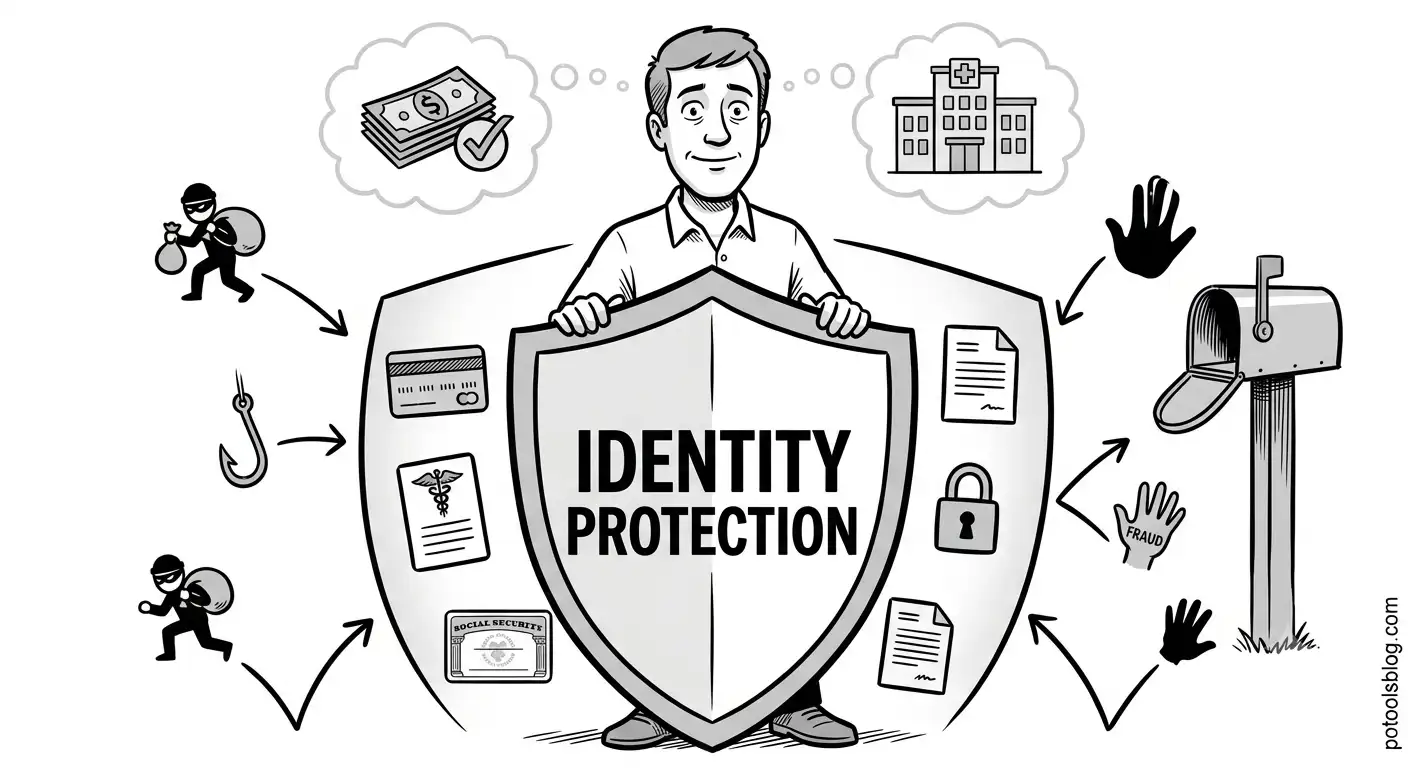
Call the office using a number you looked up yourself, not the one in the text. Find out whether a record exists at all and get the exact details that matched it to you. If it’s a name-only or loose birthdate match, go in person with ID that same week. That single step closes out most of these cases in one conversation.Keep your credit frozen at all three bureaus for as long as the dispute stays open, regardless of how it resolves. Hold off on a police report or an FTC complaint until the office puts what happened in writing — filing early doesn’t speed anything up, it just adds paperwork with nothing behind it yet.
It might feel tempting to threaten a lawsuit right on that first call. Resist it. The moment a billing office hears “lawyer” or “attorney,” a lot of them stop talking to you directly and route everything through legal instead — which is the opposite of what you want when the actual problem is a five-minute records fix. Let the billing team correct an obvious mistake first, and keep legal language in reserve for if this genuinely turns into a fraud case.Once someone confirms the file is corrected, get it in writing and keep it. If the charge resurfaces months later as a collections notice, that letter is what clears it without starting the whole investigation over.
FAQ
The bill is wrong. Should I pay it anyway, just to be safe? No. Skip the payment and skip any payment plan until the office confirms the file is really yours. Paying doesn’t protect you — it just makes the mistake harder to unwind later.
Will this show up on my credit report? Only if it sits unpaid long enough to land in collections. A quick check at AnnualCreditReport.com shows whether anything’s posted yet, and a freeze keeps new accounts from opening while you wait.
What if the billing office won’t budge? Ask for a supervisor. Get everything in writing. If it still stalls and moves to collections, file a complaint with the Consumer Financial Protection Bureau.
Does it make sense to request my medical records? If there’s any doubt at all, yes. Pulling the chart tied to the account tells you fast whether the details even match you, and it’s documentation you’ll want on hand if this ever resurfaces.
How long does a security freeze last? Indefinitely — until you personally lift it for a specific application. No expiration date, no cost either way.
Remember that first question — did someone steal your identity? In most of these cases, the honest answer is no. Someone’s records got crossed, the billing office fixes the chart, and life goes back to normal. Verify everything through the office’s official contact information first. Then keep following up until someone actually corrects the record. And before you consider it closed, get written confirmation that the fix happened.
Disclaimer: The information on potoolsblog is for educational purposes only and does not constitute financial, tax, or investment advice. Always consult a qualified financial professional before making decisions about your money. Card terms, insurance rates, and government program rules are subject to change; verify current details with the official issuer or relevant agency before acting.